
Yu Chunbo
The Chinese version was first published on iplead, Date: October 28, 2024
Machine Translated by Google
“Patent rights are an important weapon in business warfare, and the results of patent evidence searches often have a decisive impact in business battles.”
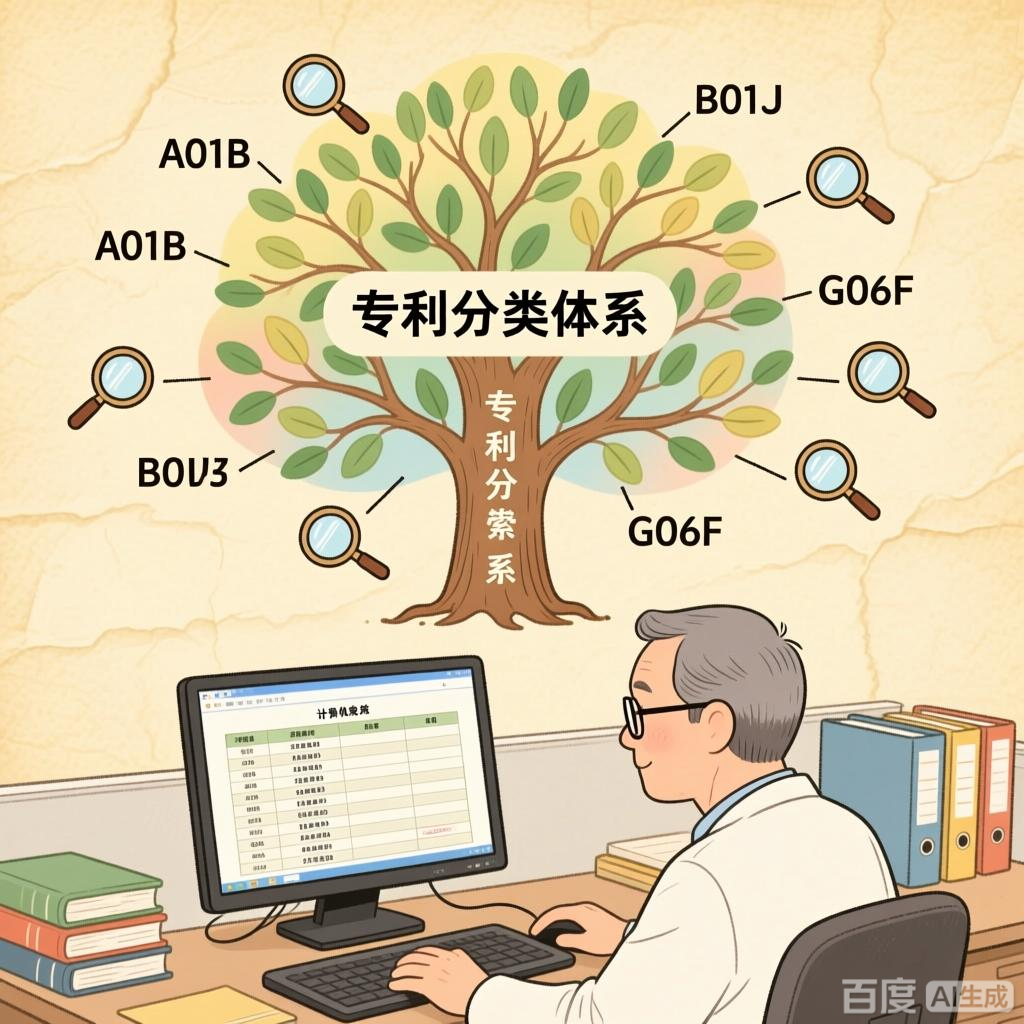
The essence of the patent system is “disclosure for protection,” and patent documents published by national patent offices are among the most important technical intelligence worldwide. Patent publications/announcements are stored in official databases of national patent offices and numerous commercial databases, continuously updated through international patent document exchange systems. Their content and publication time cannot be altered, making their legality, authenticity, and publication time easier to verify and accept. Therefore, in judicial practice within the field of patent law, whether it’s prior art defense in patent infringement litigation, novelty and inventiveness evaluation during patent granting and confirmation, potential risk analysis in Freedom to Implement (FTO) analysis, or evidence retrieval for patent layout and navigation, patent publications/announcements are the most important type of evidence. Patent rights are a crucial weapon in commercial warfare, and the results of patent evidence retrieval often have decisive significance in such situations.
I. What is a Classification Number?
A classification number is an identifier assigned to a specific category of patent documents within a patent classification system. A typical application of document classification systems is the small compartments in the Langya Pavilion used to store intelligence in the popular TV series “Nirvana in Fire.” Langya Pavilion stores the received intelligence in different cells. When you need to find this intelligence, you can go to the relevant cell. Each cell represents a category number.
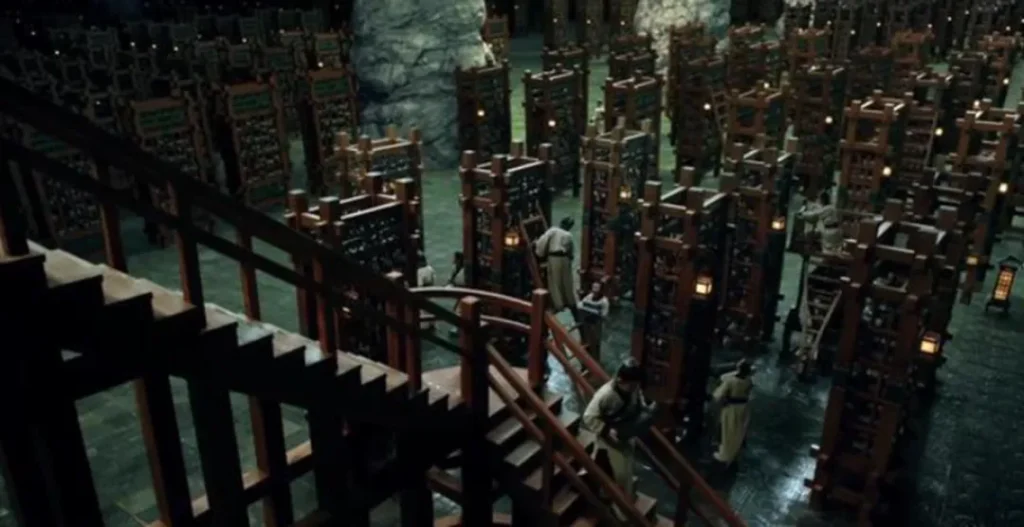
The information grids of Langya Pavilion are a fictional concept in film and television dramas, but in reality, such a scene once existed in the patent office. In the early patent examination process, some rooms in the patent office stored paper patent publications. These paper patent documents were stored according to classification numbers, with each classification number corresponding to a cabinet. When a patent examiner submitted a proposal, they would receive the paper application documents and then search for the paper prior art in the cabinet corresponding to that application’s classification number.
The introduction of classification numbers effectively overcame the search noise caused by differences in language habits. As is well known, regardless of the language, different people will always have discrepancies in their descriptions of the same thing. Many factors such as region, industry, era, and education level can affect language expression. For example, the commonly used screwdriver is often referred to as a “gaichui” by many, while in some regions it is called a “qizi” or “chazi,” and in some industries it is called a “luosipi” or “luosipu.” If only keywords are used for classification and retrieval, all expressions other than “screwdriver” may be missed. In patent classification systems, such as the IPC classification, regardless of whether the patent document uses the language of a screwdriver, screwdriver, auger, screwdriver, or screwdriver planer, these documents will be classified under subclass B25B. Using the classification number for searching can effectively avoid missing any entries.
II. Commonly Used Classification Number Types and Characteristics
For invention and utility model patents, the most common classification systems are the International Patent Classification (IPC) and the Common Patent Classification (CPC). In addition, some countries and regions have their own unique classification systems, such as the US Patent Classification (USPC), the European Patent Classification (ECLA/ICO), and the Japanese Patent Classification (FI/FT).
Among them, the International Patent Classification (IPC), published by the World Intellectual Property Organization (WIPO), is the most widely used classification system in daily use. The IPC classification system divides invention and utility model patents into eight parts: Part A: Human Necessities; Part B: Operations and Transportation; Part C: Chemicals and Metallurgy; Part D: Textiles and Paper; Part E: Fixed Buildings; Part F: Mechanical Engineering, Lighting, Heating, Weapons, and Demolition; Part G: Physics; and Part H: Electrical Engineering. The classification system is divided into four levels: major category, minor category, major group, and minor group. For example, B25B mentioned above is a minor category, and it is further divided into major groups and minor groups. For example, the major group B25B17 means a wrench or screwdriver operated by manual gears, and the minor group B25B15/02 means one operated by turning a handle. In daily searches, the combination of IPC classification numbers and keywords can meet basic search needs. However, in some complex and difficult cases, other classification numbers need to be used as needed. For example, CPC classification numbers can be used. The biggest advantage of the CPC classification system is its detail. The IPC classification system includes about 70,000 classification numbers, while the CPC classification system includes about 250,000 classification numbers. The CPC classification system also has the advantage of rapid updates. The IPC classification system is updated once a year, while the CPC classification system is updated once a month. Therefore, using CPC classification numbers for retrieval can improve efficiency in many scenarios and better adapt to fields with rapid technological development [1]. It is worth noting that the Japanese Patent Classification (FI/FT) is particularly effective for Japanese patent evidence. The FI classification is a further subdivision and expansion of the IPC classification by the Japan Patent Office. Considering Japan’s unique language habits, searching using the FI classification often yields unexpected discoveries. The F-term (FT) classification system is a classification system established by the Japan Patent Office. While the IPC classification system and IPC-based classification systems focus on classifying single technical topics, F-terms classify technical topics from multiple technical perspectives, such as use, structure, material, purpose, manufacturing method, usage method, device, and type. This multi-viewpoint classification method can lead to different search results due to its unique perspective.
For design patents, the most widely used classification system is the Locarno classification system. The Locarno classification (LOC) is based on the Locarno Agreement on Establishing an International Classification for Industrial Design, dividing designs according to different design types and elements, covering a wide range of design fields, such as electronic products, daily necessities, and clothing. The Locarno classification system comprises 32 main categories, further subdivided into subcategories composed of numbers and letters. The 32 primary categories of the Locarno Classification (LOC) are represented by Arabic numerals from 1 to 32, such as Category 1 “Furniture,” Category 2 “Decorative Objects,” etc. Each primary category contains several subcategories, represented by Arabic numerals and Roman letters, such as “1-01,” “1-A,” etc.
III. Advantages of Using Classification Numbers for Searching
In some complex search projects, the use of classification numbers is essential. For example, in the invalidation case of a complex patent, the petitioner initially filed five invalidation requests, all without finding sufficient evidence. The successful retrieval of usable evidence in the sixth invalidation attempt relied primarily on the comprehensive application of classification numbers.
The target claim is as follows:
“1. A method for intermittent gas supply control of an ice cream machine, characterized by comprising the following steps:
(1) The control system initializes and sets the gas supply threshold and corresponding gas supply conditions for the air delivery device to stop supplying gas, and the gas supply threshold and corresponding gas supply conditions for the air delivery device to supply gas, and saves them to the control system;
(2) After the ice cream machine is turned on, the air delivery device opens and injects air into the refrigeration cylinder of the ice cream machine;
(3) The detection device detects the gas supply control parameters that affect the gas supply of the air delivery device in real time, and the control system transmits the gas supply control parameters measured by the detection device in real time…” The parameters are compared with the set gas-stopping threshold. When the gas-stopping control parameters meet the set gas-stopping conditions, the control system controls the air delivery device to stop injecting air into the refrigeration cylinder;
(4) The detection device detects the gas-supply control parameters affecting the gas supply of the air delivery device in real time, and the control system compares the gas-supply control parameters measured by the detection device in real time with the set gas-supply threshold. When the gas-supply control parameters meet the set gas-supply conditions, the control system controls the air delivery device to open and inject air into the refrigeration cylinder;—”
The inventive point of the target patent is that it uses an automatic control method to intermittently supply gas to the ice cream machine, with the gas supply and gas-stopping phases occurring cyclically. For the inventive point, the keyword is “intermittent.” Expanding the keyword, there may be many other keywords such as “cyclic” and “discontinuous.” The key point is that most intermittently gas-supplying ice cream machines disclose only their specific processing procedures and parameters, and the keyword “intermittent” is unlikely to appear. Therefore, this search item must primarily use the classification number, with keywords as a secondary consideration.
When selecting a classification number, there is no classification related to intermittent operation in the IPC classification numbers. Further investigation of the CPC classification number revealed that A23G9/163 means A human necessities – A23 food or food – A23G ice cream and its preparation – A23G9/00 frozen desserts, such as frozen desserts, ice cream; mixtures thereof – ****A23G9/163 {with intermittent action}. Based on the CPC classification number A23G9/163, combined with keyword retrieval, evidence US8479531B2 was obtained. Following up on US8479531B2, the Chinese invention patent publication CN1668508A[2] was obtained.
Analysis of the retrieved evidence CN1668508A revealed that its patent specification was directly derived from a foreign language translation, and its language habits and word choices differed greatly from conventional Chinese language habits. Directly using Chinese keywords for retrieval might never yield this evidence, which is the main reason why this evidence was not found in the first five invalid searches. By defining the “intermittent” characteristic through CPC classification numbers, ideal patent document evidence can be obtained efficiently.
IV
Summary
Patent rights often involve huge commercial interests. In some scenarios, such as prior art defense searches in patent infringement litigation and patent invalidation evidence searches, the results of patent document searches are often the deciding factor, affecting the survival and development of enterprises. The patent classification system itself is a great invention. By using classification numbers to search for patent documents, the bias caused by language habits can be effectively overcome, and patent documents can be searched accurately, comprehensively, and efficiently. By comprehensively applying various patent classification numbers and combining them with keywords, we can overcome difficulties in patent document searches and solve the most important and difficult problems.
References
[1] Liao Jiajia et al., Joint Research on Patent Classification System, Modern Information, January 2014, Vol. 34, No. 1.
[2] State Intellectual Property Office, Invalidation Decision No. 560055.