
Yu Chunbo
The Chinese version was first published on iprdaily.cn, Date: May 6, 2025
Machine Translated by Google
“This article briefly analyzes the necessity of the summons procedure in a lawsuit to confirm non-infringement.”
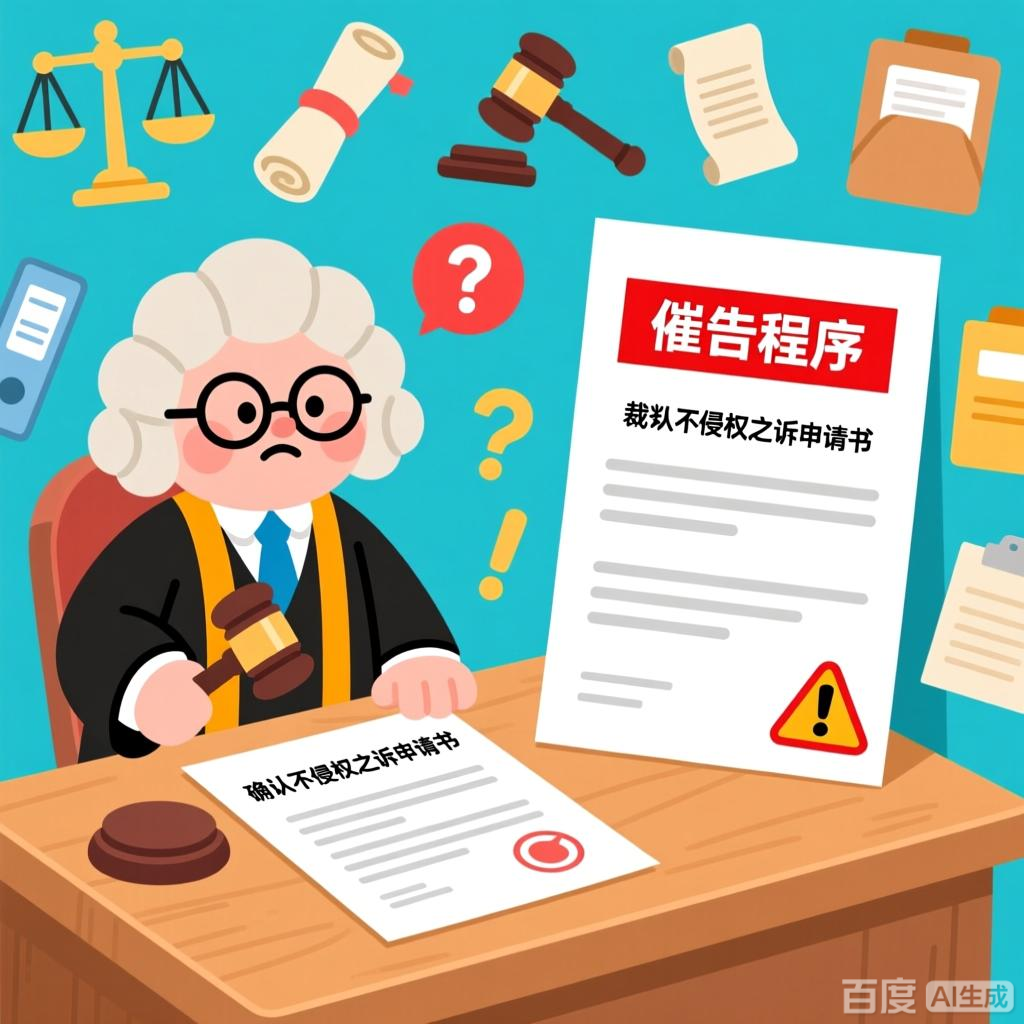
In modern business warfare, intellectual property is a crucial weapon. The proper use of intellectual property can obviously generate enormous commercial benefits; however, the abuse of intellectual property can lead to an imbalance between the interests of the rights holder and the public. Declaratory judgment action, as a balancing force in the field of intellectual property, plays an irreplaceable role in regulating the abuse of rights and maintaining market competition order. The filing of a declaratory judgment action is closely related to the demand procedure. This article briefly analyzes the necessity of the demand procedure in declaratory judgment actions.
01 The Origin of Declaratory Judgment Actions
The root of declaratory judgment actions lies in the defendant’s infringement warning. A common scenario is that the defendant first issues an infringement warning, and after the plaintiff’s demand, no infringement lawsuit is filed within a certain period, thus causing unease in the plaintiff’s legal status. To eliminate this unease and instability, the plaintiff can choose to file a declaratory judgment action, requesting the court to confirm the relevant facts to relieve this unease.
The need for declaratory judgment actions has long existed in countries implementing patent systems. In the United States, a similar system is called the “declaratory judgment system.” In the 1933 case of Nashville, C. & St. L.R. Co. v. Wallace, the U.S. Supreme Court ruled that a declaration of judgment lawsuit should be accepted. In 1934, the U.S. Congress passed the Declaration of Judgment Act, making a declaration of judgment a statutory remedy, and the court made a judgment on the existence of a legal relationship. In contrast, China’s relevant system is still under development. It is generally believed that China’s system of declaratory judgments of non-infringement originated in 2002. In the “Reply on the Case of Suzhou Longbao Bioengineering Industry Co. v. Suzhou Langlifu Health Products Co., Ltd. Requesting Confirmation of Non-Infringement of Patent Rights,” the Supreme People’s Court first clarified that the Civil Procedure Law can be used as the basis for the claim of declaratory judgments of non-infringement, and clarified that “using ‘request for confirmation of non-infringement of patent rights dispute’ as the cause of action can more directly reflect the essence of the dispute between the parties” [1]. This reply clarified that declaratory judgment disputes can be filed separately and determined the name of the cause of action. Subsequently, in the “Provisions on Causes of Action in Civil Cases” promulgated by the Supreme People’s Court in 2008, “disputes over confirmation of non-infringement” officially became a third-level cause of action in civil litigation, including three fourth-level causes of action: disputes over confirmation of non-infringement of patent rights, disputes over confirmation of non-infringement of copyright rights, and disputes over confirmation of non-infringement of trademark rights. In 2018, the Supreme People’s Court issued a notice adding three fourth-level causes of action below “disputes over confirmation of non-infringement,” including disputes over confirmation of non-infringement of plant variety rights.
02 Legal Basis for Pre-emptive Notice Procedure
The pre-emptive notice procedure for lawsuits over confirmation of non-infringement is clearly stipulated in judicial interpretations related to patent disputes. Article 18 of the “Interpretation of the Supreme People’s Court on Several Issues Concerning the Application of Law in the Trial of Patent Infringement Disputes” (Fa Shi [2009] No. 21) stipulates that if a patent holder issues a warning of patent infringement to another party, and the warned party or interested party, after being given a written reminder to the patent holder to exercise their right to sue, fails to withdraw the warning or file a lawsuit within one month from the date the patent holder receives the written reminder or within two months from the date the written reminder is issued, the people’s court shall accept the case if the warned party or interested party files a lawsuit with the people’s court requesting confirmation that their actions do not infringe patent rights.
According to this provision, a reminder is a prerequisite for filing a lawsuit to confirm non-infringement of patent rights. In lawsuits involving other types of intellectual property rights, the defendant often cites the above provisions to defend against situations where no reminder was given. For example, in the dispute between Wanglaoji Co., Ltd. and Guangzhou Wanglaoji Big Health Industry Co., Ltd. regarding the confirmation of non-infringement of trademark rights, Wanglaoji Co., Ltd. argued that Big Health Industry Co., Ltd. did not give a prior written reminder, therefore it did not meet the acceptance conditions for a lawsuit to confirm non-infringement and should be dismissed [2]. In practice, due to the highly specialized nature of declaratory judgments against infringement, and the relatively low cost and difficulty of urging the opposing party to exercise their rights, most plaintiffs in declaratory judgments against infringement fulfill the urging procedure. A search of publicly available judgments involving urging procedures in declaratory judgments against infringement yielded 87 judgments, in which, in 90% of the cases, the plaintiffs fulfilled the urging procedure in some form.
In some cases, the plaintiff did not issue a formal urging letter, but as long as a reply containing a relevant expression of intent was sent, the court often recognized that the case met the filing requirements. For example, in the patent non-infringement dispute between Zhejiang Dun’an Hetian Metal Co., Ltd. and Zhejiang Sanhua Intelligent Control Co., Ltd., the defendant, Sanhua, argued that the plaintiff’s “patent communication letter” issued after receiving the infringement warning did not include an expression of intent to urge the defendant to exercise their right to sue, and that the letter also had formal defects. Therefore, the plaintiff did not fulfill the urging procedure, the case did not meet the filing requirements, and the plaintiff’s lawsuit should be dismissed. The Shaoxing Intermediate People’s Court held that the plaintiff sent a patent communication letter to Sanhua Holdings Company, indicating to the defendant that the warning light product did not infringe the patent right in question, and that both parties could resolve the dispute through negotiation. Within one month of receiving the communication letter, the defendant neither withdrew the infringement warning nor filed a lawsuit, leaving the plaintiff in a state of unease. Therefore, the court of first instance held that the case met the conditions for acceptance [3].
03 Case Analysis of Cases Without Demand
Although in most cases the plaintiff fulfilled the demand procedure, there were still some cases in which the plaintiff did not fulfill the demand procedure. This situation does not necessarily lead to the case not meeting the conditions for filing. For example, in the aforementioned dispute between Wanglaoji Co., Ltd. and Guangzhou Wanglaoji Health Industry Co., Ltd. regarding the confirmation of non-infringement of trademark rights, the court held that the judicial interpretation clearly stipulated the conditions for a lawsuit to confirm non-infringement of patent rights, while there were no relevant legal provisions in the field of trademarks. Under normal circumstances, the judicial interpretation provisions in the field of patents can be referred to in the field of trademarks. However, in a lawsuit to confirm non-infringement of trademark rights, the aforementioned demand procedure should not be mechanically applied. If the written notice procedure of the aforementioned judicial interpretation is mechanically referred to, and the lawsuit is dismissed, and then the plaintiff is required to issue a notice, and then the plaintiff files a lawsuit to confirm non-infringement of trademark rights, it will only add meaningless judicial procedures. Therefore, the court determined that the case met the conditions for acceptance and made a substantive judgment [2]. In the case of Shanqiao Company v. Tianheng Company regarding the dispute over confirmation of non-infringement of patent rights, the plaintiff Shanqiao Company did not perform the notice procedure and directly filed a lawsuit. The special feature of this case is that the defendant Tianheng Company filed an infringement lawsuit after sending a lawyer’s letter to the plaintiff Shanqiao Company and its customers. Before the court made a judgment on the infringement lawsuit filed by it, it voluntarily withdrew the lawsuit. In the lawsuit to confirm non-infringement, the court held that the defendant Tianheng Company’s withdrawal of the lawsuit indicated that it retained the right to sue the plaintiff Shanqiao Company again, and that the fact that Shanqiao Company had infringed its patent rights was not confirmed in the infringement lawsuit brought uncertain adverse effects to the plaintiff Shanqiao Company. The court of first instance held that the plaintiff Shanqiao Company had not performed the notice procedure and the case did not meet the conditions for acceptance, and ruled to dismiss the lawsuit. In the second instance, the Jiangsu High Court held that setting a written reminder to file a lawsuit was intended to prevent the warned party from frequently filing a lawsuit to confirm non-infringement, and to guide the warned party to resolve disputes through an infringement lawsuit as much as possible. In this case, the plaintiff, Shanqiao Company, was still clearly in a state of unease due to the infringement warning threat from Tianheng Company. Mechanically requiring Shanqiao Company to send another written reminder to Tianheng Company was unnecessary and did not conform to the legislative purpose of setting a reminder to file a lawsuit in the judicial interpretation. In fact, it would only add meaningless procedural delays. Therefore, the Jiangsu High Court revoked the first-instance ruling and ordered the first-instance court to continue the trial [4].
Similarly, in the dispute between Quanzhou Craft Co., Ltd. and Wan and Zhejiang Network Co., Ltd. regarding the confirmation of non-infringement of patent rights, the first-instance court also made a civil ruling, holding that the plaintiff’s direct filing of a lawsuit to confirm non-infringement without sending a written reminder to the defendant to exercise the right to sue did not conform to the relevant judicial interpretation. In the second instance, the Supreme People’s Court held that the notice of acceptance of the first instance case of the prior confirmation of non-infringement (the related case of this case) could be regarded as a reminder to Wan to exercise his right to sue. Wan never took the initiative to file a patent infringement lawsuit, nor did he withdraw his complaint from Zhejiang Internet Co., Ltd., which caused Quanzhou Craft Co., Ltd. to be in a state of unease. It was necessary to make a clear judgment on this uncertain state through judicial procedures. The Supreme People’s Court revoked the first instance judgment and tried to confirm that the plaintiff did not infringe the patent right[5].
04 Summary
In the confirmation of non-infringement lawsuit, for cases involving whether or not patent rights are infringed, the reminder procedure is stipulated as a pre-litigation procedure in judicial interpretations. Under normal circumstances, the confirmation of non-infringement lawsuit involving other types of intellectual property rights can refer to the relevant judicial interpretations on patent rights and make a reminder before filing a lawsuit. However, this reminder procedure is not a rigid and mechanically applicable procedure. Even if the plaintiff does not strictly issue a written reminder letter, if other correspondence or even actions that can serve as reminders are taken, it may be considered that the reminder procedure has been completed. If the dismissal of the lawsuit only causes a meaningless procedural deadlock, the court may also directly try the substantive part of the case. References:
[1] Supreme People’s Court, Reply to the Case of Suzhou Longbao Bioengineering Industry Co., Ltd. v. Suzhou Langlifu Health Products Co., Ltd. Requesting Confirmation of Non-Infringement of Patent Rights.
[2] Guangdong Provincial Higher People’s Court, Civil Judgment No. (2016) Yue Min Zhong 240.
[3] Shaoxing Intermediate People’s Court of Zhejiang Province, Civil Judgment No. (2017) Zhe 06 Min Chu 243.
[4] Jiangsu Provincial Higher People’s Court, Civil Judgment No. (2016) Su Min Zhong 610.
[5] Supreme People’s Court, Civil Judgment No. (2022) Zui Gao Fa Zhi Min Zhong 246.