
Yu Chunbo
The Chinese version was first published on iprdaily.cn, Date: March 3, 2025
Machine Translated by Google
“This article analyzes the use of public evidence in industrial design by combining case studies.”
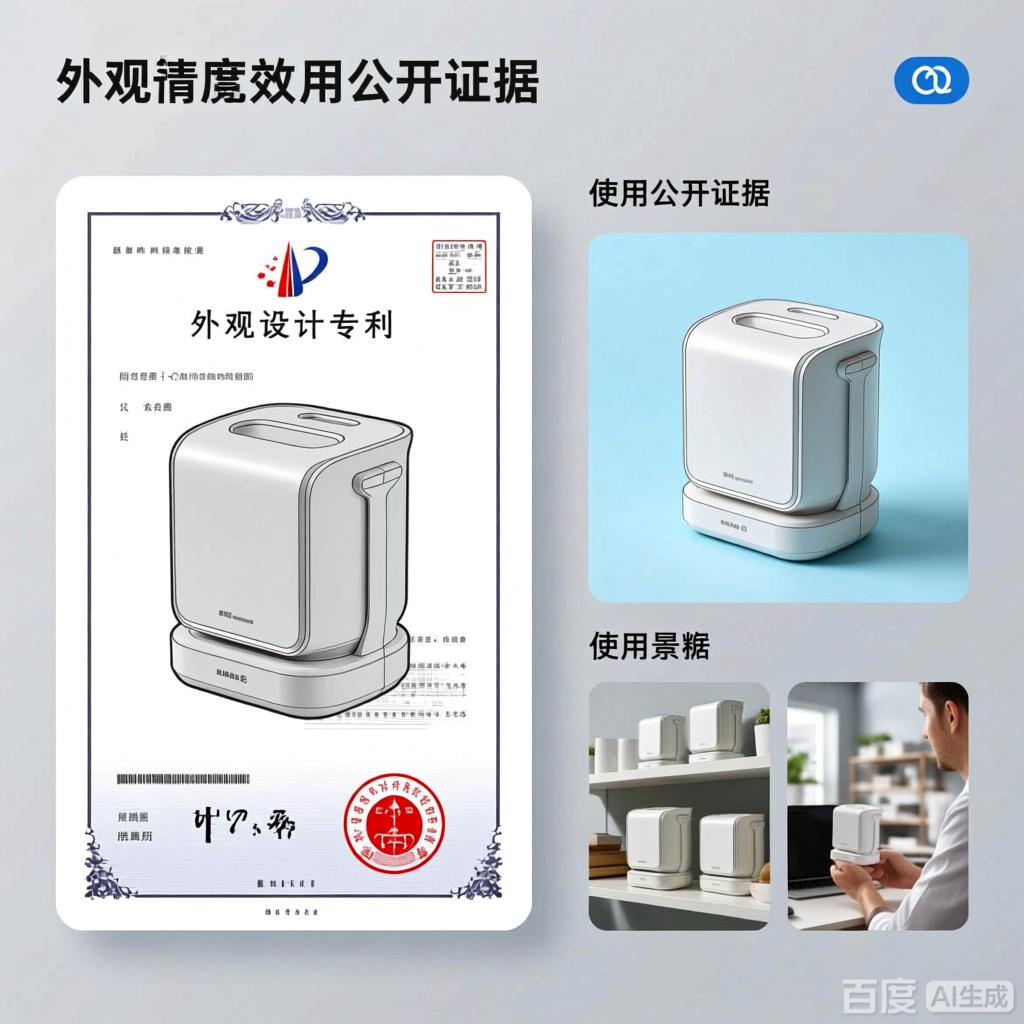
The evidence used in invalidation proceedings for design patents differs significantly from that used for invention and utility model patents. Statistical analysis of patents that are fully or partially invalidated reveals that for invention and utility model patents, the primary evidence is publication evidence, including patent documents, academic papers, and books; the use of publicly available evidence is relatively rare. However, for design patents, the use of publicly available evidence is one of the main types of evidence. Therefore, studying the common types, criteria for determining, and major deficiencies of publicly available evidence in design patent invalidation proceedings has significant theoretical and practical implications.
1. Overview of Publicly Available Evidence in Design Patent Invalidation
In design patent invalidation proceedings, the most commonly used invalidation clause by the petitioner is Article 23 of the Patent Law. The main content of this clause in invalidation proceedings is that a design patent must not belong to the prior art and must be clearly distinguishable from prior art or combinations of prior art features. Prior art refers to designs known to the public domestically or internationally before the filing date. So how can one prove that the target design patent is an prior art or lacks the aforementioned clear distinction? Evidence of prior art is necessarily required.
Public disclosure evidence is a type of prior art evidence. The *Patent Examination Guidelines*, concerning the examination of design patents, does not explicitly specify content related to public disclosure. However, the provisions on public disclosure in the invention patent examination section of the *Patent Examination Guidelines* can be referenced; the relevant content is recorded in Chapter 3, Novelty, of Part Two, Substantive Examination. According to this section, public disclosure includes methods that enable the public to know the technical content, such as manufacturing, using, selling, importing, exchanging, gifting, demonstrating, exhibiting, and bidding. As long as the relevant technical content is made available to the public through these methods, it constitutes public disclosure, regardless of whether the public actually knows it.
In practice, public disclosure evidence is very common in invalidation proceedings for design patents. Common public disclosure scenarios include publicly demonstrating the product on the internet, manufacturing and selling the product through contracts, and transmitting drawings via email.
2. Proving Public Disclosure with Internet Evidence
Currently, the most common form of public disclosure evidence is internet evidence, and this type of evidence has distinct characteristics of its time. For design patents filed in recent years, the most common evidence carriers are short video platforms such as Douyin, Kuaishou, and Xigua Video. For earlier design patent applications, common evidence carriers include web pages and blogs. For online evidence, the focus of the dispute is often the publication time and scope; therefore, whether the publication time can be modified on the carrier is crucial.
Currently, some short video tools do not allow modification of the publication time, hence short video evidence is prevalent in recent design patent invalidation cases. For example, in the “vibrating push plate” case, the petitioner argued that Evidence 1.1 recorded that a third party had published the patent before the application date through online or offline means. Specifically, a Xigua Video account published numerous promotional videos on different dates, disclosing the design features of the patent. The patentee acknowledged the content of the evidence but disagreed with the publication date. Evidence 2.1 recorded a “factory assembling equipment daily” video posted by a Douyin user before the application date, showing the push plate below the product as an existing design. The patentee acknowledged the content and publication date of the evidence. Based on Evidence 2.1, the panel ultimately determined that the entire patent was invalid [1]. In the case of “Automobile (Lorinser LS560MX model)”, the petitioner submitted Douyin video evidence. The patentee did not recognize the authenticity of the evidence or the publication time, but believed that the publication time could be modified and stated that he did not understand the editing mechanism of Douyin video. The petitioner stated that the publication time of Douyin video could not be modified, and the Douyin video publisher, which was used as evidence, clearly had the intention of promotion, so there was no tendency to set it to private when the video was published. The panel believed that Douyin is a creative short video software and a well-known short video community platform in my country. According to the nature and management mechanism of the Douyin platform, users can create and publish short video works through the software. After uploading the video, the system automatically generates the upload time, and the video content is usually in an uneditable state after uploading. Therefore, in the absence of contrary evidence to refute it, the panel confirmed the authenticity of the Douyin video shown in the evidence and the correspondence between the upload time and the video[2]. Similar to this case, in the “Magnetic Zipper Automatic Opening Plugin” case [3] and the “Street Lamp (Cardcaps)” case [4], the panel also accepted the Douyin video evidence and ruled the patent in question invalid.
Not all online evidence is accepted. For example, in the “Packaging Box (High Calcium Sugar-Free for Middle-Aged and Elderly)” case, the petitioner submitted photos and videos posted in a friend’s circle before the application date. The panel held that the identity of the friend who posted the photos and videos could not be confirmed, and the friend did not appear in court to explain the situation. Considering the familiar social attributes of WeChat Moments, this evidence could not prove that the purpose and scope of the photos and videos posted in the friend’s circle could lead to their being known by unspecified individuals. Accordingly, the panel did not support the petitioner’s claim [5].
3. Documentary and Physical Evidence Proving Public Use
In some cases, the products associated with the patent in question had already been sold before the patent application date. In such cases, the relevant contracts, drawings, physical objects, etc., may become evidence of public use. However, in many cases, the evidence submitted by the petitioner could not form a complete chain of evidence, resulting in the public use evidence not being accepted. For example, in the “Connector (Internal Thread)” case, the petitioner submitted a contract for commissioned mold design, accounting vouchers for transactions between the two companies, invoices, service lists, design drawings, quality inspection reports, and product photos, intending to prove that the patent in question was an existing design. The patentee, however, argued that the authenticity, legality, and relevance of some of the evidence submitted by the petitioner were unacceptable. The contract’s date was handwritten, the signature and date appeared to have been added later, and the seal appeared to be electronic. Furthermore, the evidence did not include a product design identical or similar to the patent in question. The contract stipulated a customized product, and the purchase and delivery dates could not prove the time of its public sale. Among the correspondence, only one product mold drawing similar to the patented product was provided, but this was merely a communication document; the petitioner did not provide a new purchase contract corresponding to this mold drawing. Therefore, this mold drawing lacked probative value. In this case, the panel held that the petitioner had no evidence to prove the correspondence between different numbers or models in the contract, and therefore could not prove that the product shown in the photograph was the product commissioned for processing under the contract. The design drawings in the evidence pertain to communications between the requester and jack@efeng.com via email. In commercial operations, this constitutes content subject to implicit confidentiality obligations by both parties, and is not a publicly published document. Therefore, its content cannot be considered publicly known. Ultimately, the panel did not support the requester’s claim [6].
In other cases, such use of publicly available evidence has been recognized. For example, in the case of “Intelligent Balance Regulating Valve (2),” the requester, before the patent application date, notarized the purchase of the product as evidence under the witness of a notary public and notarized the supply contract, which clearly specified the product model. The patentee objected to the authenticity of the contract, but did not object to the authenticity of the physical product involved in the evidence and acknowledged that the product existed before the application date. The panel of judges held that although the patentee objected to the authenticity of the contract, it acknowledged the authenticity of the physical products involved. The requester notarized the signing of the contract for the purchase of intelligent regulating valves and actuators for units/buildings, the delivery process, and the sealing process. Based on the evidentiary effect of the notarized document, the legal source of the photographs of the intelligent regulators in the evidence and their actual existence at the time of notarization could be confirmed. Furthermore, the contract did not stipulate that the supplier had a confidentiality obligation regarding the purchased products. Therefore, the intelligent regulators in the evidence were already in a state where the public could easily access them, constituting a public use in the sense of patent law [7].
4. Conclusion
The invalidation procedure for design patents is unique. Relatively speaking, it is difficult to find identical or similar designs in patent documents, journals, and other publications. Public use evidence often originates from the patentee themselves, so in terms of content, it is often almost identical to the patent in question. However, the determination of the evidence, especially the determination of the publication time and scope, is crucial to the outcome of the case. This article analyzes public use evidence in design patents using case studies to provide reference for parties involved in such cases.
References:
[1] State Intellectual Property Office, Invalidation Decision No. 566206.
[2] State Intellectual Property Office, Invalidation Decision No. 567066.
[3] State Intellectual Property Office, Invalidation Decision No. 59126.
[4] State Intellectual Property Office, Invalidation Decision No. 567019.
[5] State Intellectual Property Office, Invalidation Decision No. 560430.
[6] State Intellectual Property Office, Invalidation Decision No. 565702.
[7] State Intellectual Property Office, Invalidation Decision No. 560093.