
Yu Chunbo
The Chinese version was first published on October 2024, Issue No. 778, Pages 10-14 of the journal “Law and Life”.
Machine Translated by Google
Hybridization, a breeding technology, is a household name in my country. Academician Yuan Longping, a Chinese scientist, is hailed as the “Father of Hybrid Rice.” His successful development of hybrid rice not only made significant contributions to solving my country’s food security and achieving a moderately prosperous society but also significantly helped the world escape hunger. Today, one-fifth of all rice produced worldwide originates from varieties developed through hybridization following Academician Yuan Longping’s breakthrough.
Generally, hybrid varieties are bred by crossing a male and a female parent (collectively referred to as the parents). In the eyes of breeders, both the male and female parents are crucial for obtaining superior hybrids. This article discusses, from a legal perspective, how the contribution rate of the male and female parents is determined in calculating compensation in plant variety infringement cases. It explores the different types of liability for damages if infringement of the variety rights of the male or female parent is established, under varying circumstances.
I. Overview of Hybridization Breeding Technology Plant reproduction occurs in various ways, including sexual and asexual reproduction. Asexual reproduction also involves asexual hybridization, but due to significant differences in principles and methods compared to sexual reproduction, it will not be discussed in this paper. The “paternal” and “maternal” parents discussed here refer to the reproductive materials used in sexual reproduction. Sexual reproduction also has various methods. Some plants use their own male flowers to pollinate female flowers, a process generally called “self-pollination”; others use male flowers from other varieties to pollinate female flowers, a process generally called “hybridization.”
The essence of hybridization breeding technology is human intervention and selection. Natural hybridization can also produce valuable varieties; for example, lemons have been shown to be hybrids of citron (C. medica) as the male parent and sour orange (C. × aurantium) as the female parent. However, the hybridization breeding technology we are discussing here refers to the artificial and purposeful mating of different plant varieties to create new varieties with superior traits. Hybrid breeding technology is widely used in agriculture, horticulture, and other fields, making significant contributions to improving crop yield, enhancing quality, and strengthening disease resistance.
The principle of hybrid breeding technology is to use two or more different parents to mate, combining their superior traits to create offspring with better characteristics. Hybrid breeding typically begins with the cultivation and selection of parents, usually superior inbred lines. After selecting the parents, a hybridization plan is developed, and the parents are crossed to obtain hybrid seeds. Varieties bred from two different parents are called single-cross hybrids, where the variety providing male flowers is usually called the “paternal parent,” and the variety providing female flowers is usually called the “maternal parent.” This method can quickly obtain new varieties and overcome the disadvantages of self-pollination or inbreeding in nature, improving the genetic diversity of species.
Hybrid breeding technology is particularly widely used in agriculture. Through hybrid breeding, high-yielding, disease-resistant, and stress-resistant new varieties can be created, thereby improving crop yield and quality and reducing the occurrence of diseases and pests. Besides hybrid rice mentioned earlier, major food crops such as wheat and corn have undergone long-term hybridization breeding, achieving remarkable results. In the field of horticulture, hybridization breeding technology is also widely used. Through hybridization, new varieties with vibrant flower colors, high fruit yields, and disease resistance can be created, enriching people’s choices for horticultural appreciation and consumption. For example, hybridization breeding of plants such as roses, peonies, and tomatoes provides more choices for gardening enthusiasts and growers.
II. Contribution Rates of Male and Female Parents in New Plant Varieties Article 28, Paragraph 2 of the Seed Law stipulates that no unit or individual may, without the permission of the plant variety right holder, reuse the propagation material of the authorized variety for commercial purposes to produce propagation material of another variety. Using parental lines protected by variety rights to cultivate propagation material (e.g., seeds) for profit constitutes the situation described above. In plant variety right infringement disputes, this situation often incurs civil liability such as ceasing infringement and compensating for losses. So, how are the contribution rates of the male and female parents calculated in the calculation of compensation amounts? As can be seen from the aforementioned hybridization process, the selection of the paternal parent, the maternal parent, and the hybrid itself are all crucial in the breeding of hybrids. For some field crops, industry associations also acknowledge the contributions of all three. For example, the China Seed Association adopted the “Guiding Opinions on the Distribution of Benefits from Maize Breeding Achievements” on September 23, 2014. The proposed distribution ratio for maize breeding benefits is 3:3:4 for the paternal parent: maternal parent: hybridizer. This ratio serves as a reference for “variety management rights transactions.”
These guiding opinions have had a significant impact on the industry. In some early cases, courts did indeed determine compensation amounts based on these guiding opinions. For example, in the “Zheng 58” case, the court of first instance determined the compensation amount based on the above guiding opinions, assuming the maternal parent had a 30% contribution rate. The second-instance court held that although the “Guiding Opinions on the Distribution of Income from Maize Breeding Achievements” was only a guiding opinion, it was adopted at the 7th meeting of the 5th Standing Council of the China Seed Association. Its purpose was to regulate and guide the distribution of income from maize breeding achievements nationwide, and it had important guiding and reference value. The court upheld the first-instance judgment [1]. In practice, in other cases, some plaintiffs directly claimed compensation based on the above guiding opinions at a rate of 30%. This is actually a misunderstanding, resulting in a loss of compensation. Because, in current plant variety rights infringement cases, the discretionary standard is not to calculate compensation based on a 30% rate, and the contribution rate of the parent line is higher as determined by the court. In civil litigation, the amount of compensation awarded by the court cannot exceed the amount claimed in the lawsuit. These plaintiffs may have claimed too little compensation based on a mistaken understanding, resulting in a loss in the calculation of the final compensation base. In the case of “Jinheyu 618”, the first-instance court adopted the “Guiding Opinions on the Distribution of Income from Maize Breeding Achievements” and held that the contribution rate of the parent line “YA8201” of “Jinheyu 618” in the accused infringing seeds was 30%. The second-instance court reversed the original judgment, determining that “YA8201” contributed 100% to the “Jinheyu 618” maize hybrid variety[2]. In the related case “Jinhe 880”, the first-instance court also adopted the “Guiding Opinions on the Distribution of Benefits from Maize Breeding Achievements”, believing that the contribution rate of the male parent “YA8201” of “Jinhe 880” in the accused infringing seeds was 30%. The second-instance court reversed the original judgment, stating that “YA8201” contributed 50% to the “Jinhe 880” maize hybrid variety[3]. In the “PHHJC1” case, the first-instance court determined that the contribution rate of the female parent of the maize hybrid was 50%[4]. Both “Jinheyu 618” and “Jinhe 880” used “YA8201” as the male parent. In the infringement case, the former determined that the male parent contribution rate was 100%, while the latter determined that the male parent contribution rate was 50%, which highlights the importance of applying for plant variety rights for the parent. In the “Jinheyu 618” case, the Supreme People’s Court held that the defendant in the first instance failed to provide evidence proving that the female parent “J2575” of the allegedly infringing seed “Jinheyu 618” was also protected by variety rights, and therefore determined that “YA8201” contributed 100% to the “Jinheyu 618” maize hybrid variety. In the “Jinhe 880” case, the Supreme People’s Court held that the female parent “LSC107” of “Jinhe 880” was also protected by variety rights, and therefore determined that “YA8201” contributed 50% to the “Jinhe 880” maize hybrid variety.
Of particular note are the cases of “Jinheyu 618” and “Jinhe 880,” which have been included in the People’s Court Case Database. The key point of their judgments is that “when calculating profits from the unauthorized repeated use of authorized varieties as parent lines for the production of propagation material for other varieties, the contribution rate of the authorized varieties to the infringing profits should be considered. If all parent lines are authorized varieties, the contribution rate can generally be distributed equally; if some parent lines are authorized varieties and others are not protected by variety rights, the contribution rate of the authorized varieties can be set at 100% at the court’s discretion.” According to Article 9 of the “Guiding Opinions of the Supreme People’s Court on Unifying the Application of Law and Strengthening Case Retrieval (Trial Implementation),” the People’s Courts can use this as a reference in their judgments. Generally, before new laws, administrative regulations, or judicial interpretations conflict with or are superseded by new guiding cases, the contribution rate of parent lines in plant variety infringement cases will be determined with reference to this key point of the judgments.
III. Calculation Methods for Compensation in Plant Variety Infringement Cases
Articles 72, paragraphs 3, 4, and 5 of the Seed Law stipulate that the amount of compensation for infringement of plant variety rights shall be determined according to the actual losses suffered by the right holder due to the infringement; if the actual losses are difficult to determine, the compensation may be determined according to the profits obtained by the infringer from the infringement. If the losses of the right holder or the profits obtained by the infringer are difficult to determine, the compensation may be reasonably determined by referring to a multiple of the licensing fee for the plant variety right. For intentional infringement of plant variety rights, where the circumstances are serious, the compensation amount may be determined at one to five times the amount determined according to the above methods. If the losses of the right holder, the profits obtained by the infringer, and the licensing fee for the plant variety right are all difficult to determine, the people’s court may determine compensation of up to five million yuan based on factors such as the type of plant variety right, the nature and circumstances of the infringement. The compensation amount shall include reasonable expenses paid by the right holder to stop the infringement.
The above legal provisions clarify the calculation methods for compensation in plant variety infringement cases, mainly involving three issues.
First, the order of calculation methods for compensation in plant variety infringement cases is clarified. There are four bases for calculating the amount of damages in infringement cases: the actual losses suffered by the rights holder due to the infringement, the profits gained by the infringer due to the infringement, a reasonable determination based on a multiple of the plant variety right licensing fee, and the court’s discretion. These bases are in order of priority; if the first base can be determined, it must be applied first. If the first base cannot be determined, the next base is considered in turn. If none of the first three bases can be determined, the court determines the amount of damages at its discretion, with a maximum discretionary damages amount of 5 million yuan. In practice, the actual losses suffered by the rights holder due to the infringement are often difficult to calculate accurately, and the plant variety right licensing fee is also often difficult to determine. Cases where the amount of damages is determined based on the profits gained by the infringer due to the infringement, or where the court determines the amount of damages at its discretion based on the entire case, are more common.
Secondly, the Civil Code clarifies the application of punitive damages ranging from one to five times the infringing amount. Since the implementation of the Civil Code, punitive damages have been widely applied in intellectual property infringement cases. In plant variety infringement lawsuits, punitive damages are frequently applied. For example, in the aforementioned cases of “Jinheyu 618,” “Jinhe 880,” and “PHHJC1,” all cases involved punitive damages of one time the infringer’s rights. Generally, the elements for punitive damages are that the infringer acted with subjective intent and malice, and the circumstances were objectively serious. Serious circumstances include repeated infringement, engaging in infringement as a profession, obstructing the presentation of evidence, and refusing to comply with preservation orders, among others.
Finally, it is clarified that the amount of compensation includes reasonable expenses, commonly including attorney fees, notary fees, appraisal fees, and travel expenses. In practice, claiming reasonable expenses requires providing evidence, including contracts and invoices that incurred the expenses. Expenses without contracts or invoices can still be assessed by the court at its discretion, but the strength of such claims is significantly weaker than those requiring evidence.
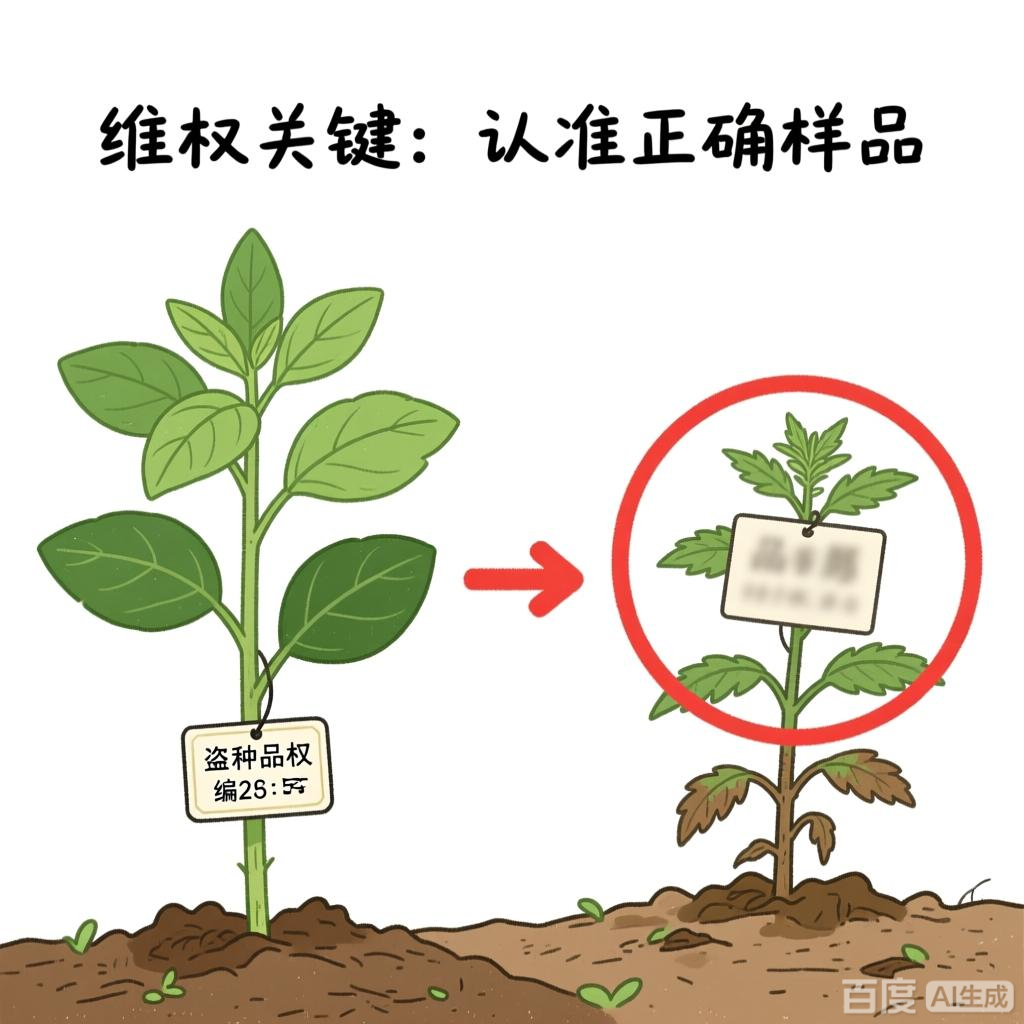
IV. Summary and Outlook The authenticity and quality of seeds are related to national security, and administrative departments at all levels manage them strictly. Hybrids themselves infringe on plant variety rights and often involve the production and sale of counterfeit seeds, with very serious legal consequences. Therefore, in plant variety infringement cases, those claiming the variety rights of the male and female parents of hybrids account for a large proportion. In such cases, the key to determining the contribution rate is whether the parent has variety rights. The parent in question must have variety rights; if the other parent has variety rights, the contribution rate of the variety in question is 50%; if the other parent does not have variety rights, the contribution rate is 100%. Therefore, applying for plant variety rights protection for the parent of a new plant variety is crucial. If both parents have variety rights, the parents of the new plant variety are equally important; if one parent has variety rights while the other does not, the parent with variety rights is more important in plant variety infringement cases.
References:
[1] Henan Provincial Higher People’s Court, (2015) Yu Fa Zhi Min Zhong Zi No. 00356 Civil Judgment
[2] Supreme People’s Court, (2022) Zui Gao Fa Zhi Min Zhong No. 783 Civil Judgment. [3] Supreme People’s Court, Civil Judgment No. 789 of 2022.
[4] Intermediate People’s Court of Hohhot, Inner Mongolia Autonomous Region, Civil Judgment No. 18 of 2023.