
Yu Chunbo
The Chinese version was first published on iplead, Date: October 11, 2023,
Machine Translated by Google
“If the infringement is established, how much compensation is required? What factors determine this amount of compensation?”
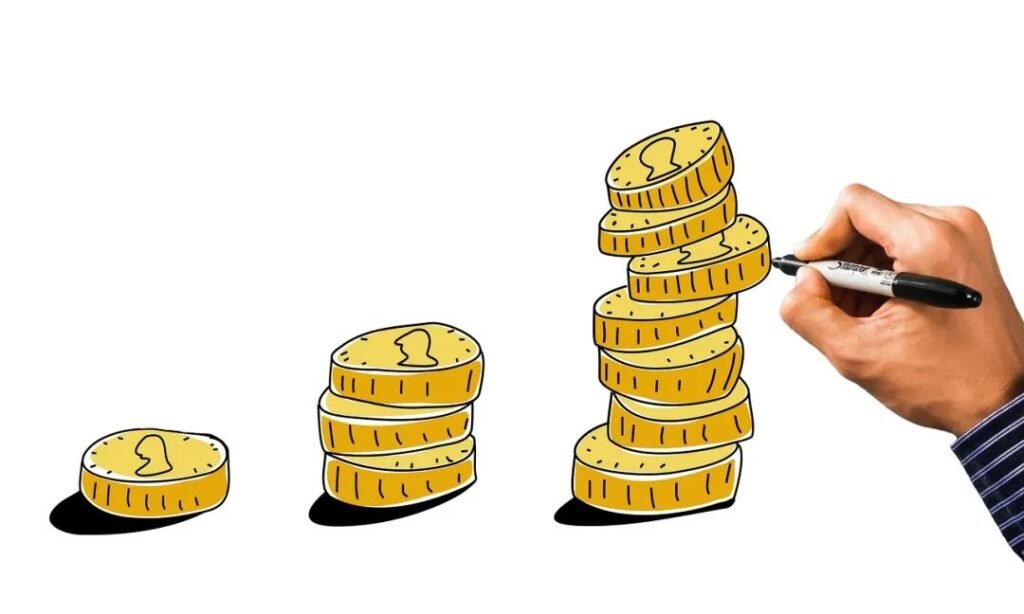
A patent right is an exclusive property right enjoyed by the patentee. Therefore, in patent infringement disputes, both the patentee and the accused infringer are often concerned about: if infringement is established, how much damages will be awarded? What factors determine this amount of damages?
Patent infringement damages refer to the amount of compensation that a court or arbitration institution can award when a patentee suffers infringement of their patent rights under the framework of patent law. The 2020 amendment to the Patent Law revised the relevant provisions regarding patent infringement damages, increasing the cost of patent infringement. This article, based on the legal provisions and specific cases, analyzes the determination of patent infringement damages.
I. Amendments to the 2020 Patent Law Regarding Damages
The 2020 amendment to the Patent Law strengthened the protection of patent rights, one important measure being the increase in the cost of infringement. This is specifically reflected in the following aspects:
First, the amended Patent Law added a punitive damages system. In cases of intentional patent infringement with serious consequences, the People’s Court may determine the amount of damages to be 1 to 5 times the amount calculated based on the losses suffered by the patent holder, the profits gained by the infringer, or a multiple of the patent licensing fee. Punitive damages are a system that combines compensation, sanctions, and deterrence, and are widely used in some countries and regions. Introducing punitive damages into patent infringement compensation is conducive to increasing the cost of violations, resolutely punishing intellectual property infringement according to law, and protecting the legitimate interests of patent holders.
Secondly, the amended Patent Law has increased the statutory damages. The original Patent Law had a maximum statutory damages of 1 million yuan and a minimum of 10,000 yuan. The amended Patent Law raises the maximum statutory damages to 5 million yuan and the minimum to 30,000 yuan. Currently, the proportion of statutory damages in patent infringement compensation in my country is relatively high. In cases where other evidence is difficult to prove, the amount of compensation is often determined by the court at its discretion. Therefore, increasing the statutory damages is of great significance for improving the strength of patent protection in my country.
Third, the original Patent Law stipulated that the amount of compensation for patent infringement should be determined based on the actual losses suffered by the patentee due to the infringement; if the actual losses were difficult to determine, it could be determined based on the profits gained by the infringer from the infringement. The amended Patent Law changes this to: the amount of compensation for patent infringement should be determined based on either the actual losses suffered by the patentee due to the infringement or the profits gained by the infringer from the infringement. That is, determining the amount of compensation based on the profits gained from the infringement is no longer subordinate to determining the amount of compensation based on actual losses; instead, both are given equal priority.
Fourth, the law adds a provision that, in order to determine the amount of compensation, if the patentee has made every effort to provide evidence, but the accounting books and materials related to the infringement are mainly in the possession of the infringer, the People’s Court may order the infringer to provide the accounting books and materials related to the infringement; if the infringer fails to provide them or provides false accounting books and materials, the People’s Court may determine the amount of compensation by referring to the patentee’s claims and the evidence provided. This clarifies the powers of the courts and the burden of proof for both parties, which is conducive to the courts ascertaining the facts and determining the amount of compensation more reasonably.
II. Factors Affecting the Determination of Damages
As can be seen from the above provisions and amendments to the Patent Law, the amount of damages for patent infringement must first consider the actual losses suffered by the patentee due to infringement, and then the infringer’s profits. If neither of these can be determined, a reasonable amount can be determined by referring to a multiple of the patent licensing fee. If the licensing fee also cannot be determined, the court will determine the amount based on the statutory damages. The nature of the infringement and whether punitive damages apply must also be considered.
In the context of the introduction of punitive damages, determining the nature of the infringement is crucial. Different types of infringement lead to different losses; for example, the amount of damages for intentional infringement and negligent infringement differs significantly. Intentional infringement refers to deliberately committing an infringing act, while negligent infringement refers to unintentionally infringing another’s patent rights. For intentional infringement, the damages are usually higher because the act is malicious. For negligent infringement, the damages need to be determined based on the specific circumstances.
The circumstances of the infringement are also very important in determining the amount of damages. Circumstances refer to the severity and degree of harm of the infringement. For example, if the infringement causes serious property damage or significant social impact, the damages may be higher. In addition, the duration and scale of the infringement must be considered. If the infringement lasts a long time or is large in scale, the amount of compensation may increase accordingly.
For some specific situations, judicial interpretations have relevant provisions. For example, the profits obtained by the infringer due to the infringement should be limited to the profits obtained by the infringer due to the infringement of patent rights. In many cases, the profits obtained by the infringer have multiple sources, and even the infringing products involve more than one patent right. In this case, the profits generated by other rights should be reasonably deducted.
III. Determination of the Amount of Compensation in Cases
In practice, the actual losses suffered by the right holder are often difficult to prove, while the infringer’s profits can be calculated based on the unit price of the infringing product, the sales quantity, the profit margin, etc. In this case, the court will determine the amount of compensation based on the profits obtained by the infringer due to the infringement. For example, in the case of the descaling shower head, Jomoo Company failed to provide evidence to prove its actual losses due to the infringement, and the court determined the amount of compensation based on the profits obtained by the infringer due to the infringement. In this case, the court considered the following factors:
(1) The nature of the infringement. The infringer’s business nature is that of an individual business owner. The infringer was identified as the seller of the allegedly infringing product, and there was no evidence to prove that it engaged in manufacturing or wholesale sales.
(2) The value of the allegedly infringing product and the profits gained from the infringement. According to the facts recorded in the notarized document, the infringer’s product was a shower set with a total price of 900 yuan. The overhead shower in this case was a component of the set.
(3) The infringer’s subjective malice and the circumstances of the infringement. In this case, Jomoo Company did not provide any evidence to prove that it had intentionally infringed or repeatedly infringed, such as having sent warning letters to the infringer but the latter continuing to sell the infringing products.
(4) The economic development of the region where the infringer is located and the infringer’s own business situation. In this case, the infringement occurred in western my country, which objectively differs from the economic development level of economically developed provinces. Therefore, the amount of compensation should be determined differently from that of economically developed provinces [1].
In many cases, the actual losses suffered by the right holder and the profits gained by the infringer cannot be determined, and there is no authorization fee to refer to. The court needs to make a discretionary determination based on the statutory compensation amount. For example, in the ophthalmic medical device case, although the rights holder, Suzhou Xuanjia Company, argued for a compensation method based on the profits from the infringement, the infringer did not recognize the rights holder’s cost procurement evidence, arguing that the contract was signed between the rights holder and its affiliated company, and the contract price and invoice did not correspond. The court also held that the rights holder’s claims regarding online store inventory, WeChat group sales volume, and franchise fees could not determine the specific amount of profits from the infringement. Therefore, the court of first instance determined the compensation amount at its discretion based on the statutory compensation amount, which was upheld by the court of second instance. The court focused on the following points: First, the patent type of the patent in question was a utility model patent. Second, the components related to the patent only involved the pupillary distance adjustment mechanism, while the accused infringing product was a precision optical device, the main value of which was reflected in the optical components. The pupillary distance adjustment mechanism involved in the patent in question was only a component of the accused infringing product, and its value was not high. Finally, the court determined the compensation amount based on the degree of technological innovation, the degree of technological contribution of the patent in question, and the value of the patented product as a component itself [2]. IV. Conclusion
The amount of damages for patent infringement is related to the cost of infringing patent rights. Reasonably determining the amount of damages is one of the important means of protecting the legitimate rights and interests of patent holders. By determining a reasonable amount of compensation, it is possible to effectively prevent others from using patented technology without authorization, thereby maintaining the market position and economic interests of patent holders, and further encouraging innovation and technological development.
The determination of the amount of damages for patent infringement is mainly based on the actual losses of the patent holder and the profits gained by the infringer. If these cannot be determined, the patent licensing fee can be used as a reference. If neither of these can be determined, the People’s Court needs to make a discretionary determination. In practice, various practical factors need to be considered. The latest Patent Law introduces a punitive damages system; correspondingly, whether the infringement was intentional and malicious is also particularly important.
References
[1] Supreme People’s Court, (2022) Supreme Court Intellectual Property Civil Final Judgment No. 15.
[2] Supreme People’s Court, (2021) Supreme Court Intellectual Property Civil Final Judgment No. 1950.